sábado, 17 de noviembre de 2012

The way by Belen Chediak

During the movie "The Way" I was really caught up in the character of Joost. He´s reliable personality, eventhought Tom always managed to avoid him. I really liked the guy because he was the optimist, funny and amusing one. The way to Santiago de Compostela was a hard trip, and he tried to make it nice. In the movie he explained he took the route because he wanted to loose weight for his brother's wedding, and because he wanted his wife to love him again. Most of the time he spent eaing in the albergues and the restaurants in Spain, but still he has a really good point. As Buddha said : "The way is not in the sky, the way is in the heart". the trip is just an excuse for the people that want to discover themselves and to find a way ou of  their daily problems.


The movie "The way" by Rafael Suarez


Why Tom is waling the Camino?

Tom whose an American ophthalmologist is walking the Camino to Santiago the Compostela, because his son died doing this trip. He is joined with 3 others walkers. Each one of them have a specific purpose of doing this spiritual trip.


I guess Tom is making this trip, because he is full of pain because of the death of his son. Tom is also trying to make a homage to his son.I also think Tom wants to know what is the thing that made his son to do this spiritual train and wants to be sure his son finishes this trip. That is why he is spreading his ashes over the camino.
Subconsciously Tom thinks he will feel better when he finishes the Camino. He thinks this train is going to help him to continue his life.

But more important Tom wants to make this spiritual trip with his son. His last trip with his beloved son.

Together.


by Rafael Suarez

El camino to santiago. Ricardo Zambrano


The Camino de Santiago, are actually several hiking routes that all lead to the town of Santiago de Compostela in northern spain. The Camino Frances is the most popular camino, starting in Saint Jean de Pied de Port in France, and ending up about 30 days later in the town of Santiago de Compostela.
The origins of the Camino de Santiago goes back one thousand years and it was an important christian pilgrimage route during the middle ages, all walking to seek forgiveness from St James. It is though that the remains of the apostle saint james is buried in the Cathedral of Santiago de Compostela. From around 813 with the discovery of the relics of the apostle and with the consent of Charlemagne, who wanted to defend their borders from the Arab invasions, Compostela will progressively become a pilgrimage center to receive their final push in the first half of the twelfth century . Soon the news spread throughout Christian Europe and the pilgrims begin to arrive at the grave, called Campus Stellae that degenerate in Compostela term.
In modern times pilgrims walk it for many reasons, not only religious, and to be a pilgrim has changed its meaning. What attracts people to the camino de santiago today, I think, is the mix of adventure, seeing spain and its culture and the camaraderie that builds up over several weeks of walking. Pilgrims that walk come from all over the world and that creates a great environment. 
The routes have public alberuges in almost every town at the end of each stage. These public alberges charges a low fee and gives you a shower and a place to sleep. This is usually beds in rooms with ten or twenty other pilgrims.

domingo, 11 de noviembre de 2012

El Camino de Santiago by Grace Ribadeneira

"El camino de Santiago" is a route traveled by pilgrims from all over Spain and across Europe to reach the city of Santiago de Compostela, where they venerate the relics of St. James the Greater. Numerous Jacobean pilgrimage routes throughout the centuries have been creating in Spain. Classified by geographical region:
        *Caminos de Santiago en Galicia
            *Camino de Santiago Portugués Interior
            *Camino de Santiago Portuguese coast
            *Camino de Santiago, the Ria de Arosa
            *Camino de Santiago, the English
            *Camino de Santiago to Finisterre
           
        *Camino de Santiago Fraces
            *Camino de Santiago Aragon Fraces
            *Camino de Santiago French
            *Viejo Camino de Santiago

        *North Camino de Santiago
            *Camino de Santiago de la Costa
            *Camino de Santiago Primitivo
            *Camino de Santiago Real
            *Camino de Santiago Basque Interior
            *Camino de Santiago Besaya
            *Camino de Santiago Vadiniense

        *Camino de Santiago, Via de la Plata
            *Camino de Santiago de la Plata
            *Camino de Santiago Sanabrés
            *Camino de Santiago from Badajoz
            *Camino de Santiago from Huelva by Sierra
            *Camino de Santiago from Huelva by the Marshes
            *Camino de Santiago from Algeciras
            *Camino de Santiago from Antequera

        *Camino de Santiago del Ebro
            *Camino de Santiago del Ebro
            *Camino de Santiago de Teruel
            *Camino de Santiago del Maestrazgo

        *Camino de Santiago de Castilla
            *Camino de Santiago Wool
            *Camino de Santiago de Soria
            * Camino de Santiago de Madrid
            *Camino de Santiago Alcarrian

        *Camino de Santiago Catalan
            *Camino de Santiago Catalan: Walking Zaragoza
            *Camino de Santiago Catalan: Walking Huesca
            *Camino de Santiago de Gerona
            *Camino de Santiago from Puigcerdá
            *Camino de Santiago from Viella
            *Camino de Santiago from Tarragona

       *Camino de Santiago Southeast and Levante
            *Camino de Santiago Southeast. Way from Alicante
            *Camino de Santiago Levantine from Valencia
            *Camino de Santiago from Cartagena: Ruta del Azahar

        *Camino de Santiago of Routes of Mozárabez
            *Camino de Santiago Mozárabe
            *Camino de Santiago by Mozarabic Toledo
            *Camino de Santiago desd Malaga
            *Camino de Santiago from Almeria
            *Camino de Santiago from Jaén

El Camino de Santiago generates new saints and legends of miracles. The privilege granted, and confirmed by Alexander III, is that the year on July 25, the feast of St. James the Great, is a Sunday can be won in the Church of Compostela thank them who make such years in Rome that there often coincide every 25 years. It is the oldest award bull that we maintain, the Regis aeterni, dated 1179. She herself refers to confirming a privilege of Pope Calixtus II (1118-1124). This pope, brother of Don Raymond of Burgundy and, therefore, uncle of King Alfonso VII, was a great benefactor of the Church of Compostela.

I think it's a very interesting way of magic and legends in which I could learn a lot from each of the known tourist through which the "Camino de Santiago", plus you could see the different species of animals and plants the places I visit.

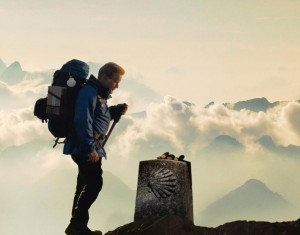
Santiago de Compostela by Stephanie


There are different ways you can take in order to make this fantastic trip. There are for example the French way which stars in Saint Jean, also you have Aragon, Vasco , Bastonéz ways, and others. Even they are different roads the spiritual experience most be the same. With beautiful landscapes and the peaceful that it offers you. This is an experience that all the people should have.

I definitely would like do this , I love the nature and I think that it is a trip that can be done alone or with the people you love , the only difference is what you are going to get from those experience, If you go alone maybe you will learn more about you , thinking , analyzing and looking for every detail about yourself  and what is happening around .
It will help you to growth as a better person. But if you go with your family or friends then you will enjoy in a different way, but it doesn’t mean that It will be lack of great deep moments. The relations between you and the people that you love would have a new and stronger connection.

 Every time you make plans to travel you have to know as much as possible of the place where you are planning to go. You have to search for maps, general information, where you can eat and rest, where you can go in case you or a friend suffers an accident. In the case of the people who want to do this trip they should know which are the stages and where they are located ,and also  what they can find there.
 
If you take for example , the French Way then you will have to know more about the 31 stages that it has. These are the first 16 stages from that way:

•          Stage1
Saint Jean Pied de Port - Roncesvalles 25,7 Km 8 hostels
•          Stage 2
Roncesvalles - Zubiri 21,5 Km 3 hostels
•          Stage 3
Zubiri - Pamplona/Iruña 20,4 Km 9 hostels
•          Stage 4
Pamplona/Iruña - Puente la Reina/Gares 24 Km 8hostels
•          Stage 5
Puente la Reina/Gares - Estella/Lizarra 22 Km 9 hostels
•          Stage 6
Estella/Lizarra - Torres del Río 29 Km 10 hostels
•          Stage 7
Torres del Río - Logroño 20 Km 7 hostels
•          Stage 8
Logroño - Nájera 29,6 Km 9 hostels
•          Stage 9
Nájera - Sto. Domingo de la Calzada 21 Km 4 hostels
•          Stage 10
Sto. Domingo de la Calzada - Belorado 22,7 Km 8 hostels
•          Stage 11
Belorado - Agés 27,4 Km 9 hostels
•          Santiago 12
Agés - Burgos 23 Km 7 hostels
•          Stage 13
Burgos - Hontanas 31,1 Km 7  hostels
•          Stage 14
Hontanas - Boadilla del Camino 28,5 Km 12 hostels
•          Stage 15
Boadilla del Camino - Carrion de los Condes 24,6 Km 9 hostels
•          Stage 16
Carrión de los Condes - Terradillos de los Templarios 26,6 Km 5 hostels

The Camino de Santiago by Reinaldo Espinoza


The Camino de Santiago is a pilgrimage routes start in the Middle Ages with the discovery of the  “sepulcro de Santiago el Mayor”,evangelizer of Spain. The road has many legends and religious stories in which you can learn quite an exciting adventure and knowing the small towns of these countries. Routes leading to Santiago are many because in the past these were important routes to Santiago.
Aragon Road begins at the port of  “Somport “ where tourists can visit the hospital of Santa Cristina, in the second stage starts tourists crossing the road where you can see the church of Santa Maria with a tower considered the most beautiful Romanesque Aragon .


In Rocaforte the third stage starts, where there is the Spanish first stay of St. Francis of Assisi and so on we can can see each of these buildings at each stage. The last stage is that of Santiago. Start the tour ” Burgo”, who continues “ Arca, San Antón, Amenal and San Paio”.. Then enters Lavacolla population where pilgrims washed and adecentaban to enter the city of Compostela.
I would like to visit the Camino de Santiago that is very interesting to know the landscapes of other countries and live a great experience walking and meeting new people. For me the most important thing is to get rid of the daily routine.

Camino a Santiago de Compostela, Belen Chediak

As we know, a lot of people do certain things in order to follow their faith, some other just for fun.
In Europe there's a reallly important pilgrimage route to the Cathedral of Santiago de Compostela, settled in Galicia, were it is known that the remains of Apostle Santiago are burried there. It is one of themost important Christian pilgrimage in the world. Every day lots of people take the route in France to Santiago de Compostela. The route is the first European Cultural Route.

The route starts usually in Roncesvalles, it is an eight hundred kilometres trip. It is known that The Milky Way share the trip from the sky.
There are plenty stops during the route, some hostels accept all of the pilgrims that hold the Pilgrim's Passport, which is sold by a few euros, gives access to free or unexpensive refugios during the Route. Most of the people take the trip because of religion, to earn forgiveness; some others tourists for allthe places tovisit, the landscapes and the food.


I would definitely do this trip. Sounds amazing to walk from one place to another visiting beautiful spots, eating delicious food and also having the experience of being a pilgrim. Some day when I have the time and money I will visit Santiago de Compostela, I think it would be a great adventure.